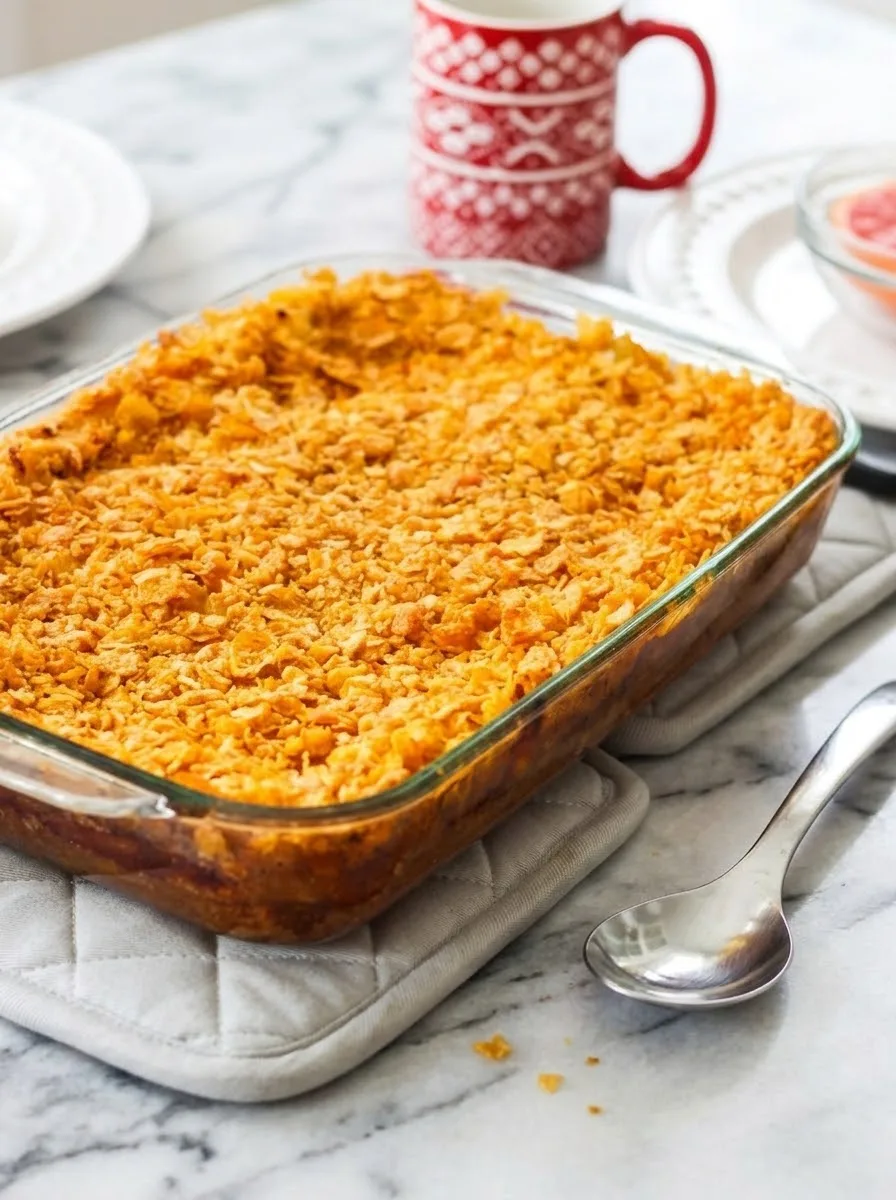
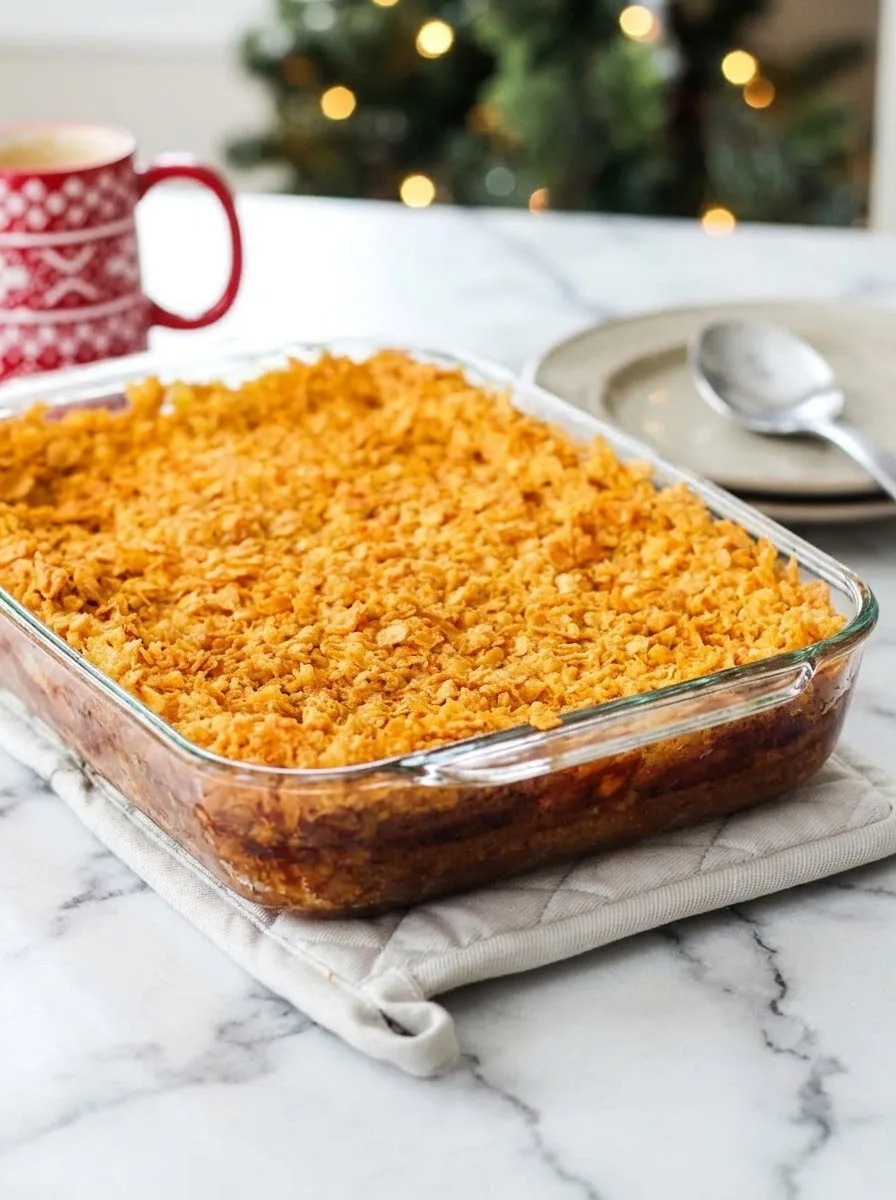
This breakfast casserole arrives at your Christmas table with crispy, buttered cornflake edges giving way to a silky custardy center studded with sharp cheddar, Canadian back bacon, and bread that’s absorbed every drop of savory custard infused with dry mustard, Worcestershire sauce, and a whisper of Tabasco. The flavor is sophisticated without being fussy—umami-forward and deeply savory in a way that makes guests linger over plates instead of rushing through breakfast.

The genius of this dish is its timing: you assemble it in 15 minutes the night before, then slide it into a 350°F oven for one hour the next morning while you’re still in your pajamas. Eight servings means you’re feeding a crowd without last-minute scrambling, and the method is forgiving enough that even if your oven runs hot or cold, the overnight refrigeration handles most of the heavy lifting.
The overnight rest is non-negotiable—it’s what separates this from a watery, undercooked scramble. The bread fully hydrates in the custard while the egg mixture sets, so when it bakes, everything cooks evenly and stays sliceable instead of collapsing into mush.
Key Ingredients & Why Each One Matters
White Bread: The foundation of this casserole needs to be sturdy enough to hold up to overnight soaking without disintegrating into mush. Standard sandwich bread works perfectly here—avoid anything too dense or artisanal, as you want those slices to absorb the custard evenly and create a tender, almost bread-pudding-like texture when baked.
Canadian Back Bacon: This is leaner and more delicate than regular bacon, so it won’t overwhelm the other flavors or render excessive fat into the custard. It layers beautifully between the bread and cheese, adding a subtle smoky saltiness that deepens the savory profile without competing with the seasoning blend.
Sharp Cheddar Cheese: Sharp is the operative word here—mild cheddar will get lost in the richness of the eggs and milk, but sharp cheddar delivers the punchiness you need to anchor the dish. It melts into the custard smoothly and creates that signature creamy, tangy note that makes people ask for the recipe.
Eggs and Whole Milk: Together, these two create the silky custard that binds everything together and hydrates the bread overnight. Whole milk is essential for richness and mouthfeel; don’t substitute with lower-fat versions, as the casserole needs that fat to stay luxurious and set properly.
Dry Mustard: This is the secret weapon that amplifies umami and adds subtle depth without any sharp tang. It works in concert with the Worcestershire to create savory complexity that makes the dish taste more sophisticated than the sum of its parts.
Worcestershire Sauce and Tabasco: Worcestershire brings fermented, anchovy-based umami, while Tabasco adds just a whisper of heat that balances the richness of the cheese and cream. Together, they prevent the casserole from tasting one-note or too heavy.
Minced Onion and Bell Pepper: Fresh aromatics add texture and brightness, while the pepper contributes subtle sweetness that plays beautifully against the savory ham and mustard notes.
Butter and Crushed Corn Flakes: Melted butter tossed with corn flakes creates that crispy, golden crown—it’s the textural contrast that makes every bite feel special.
Essential Kitchen Tools You Will Need
9×13 inch glass baking dish: The standard size for this yield; glass conducts heat evenly and allows you to monitor the casserole’s browning.
Large mixing bowl: For whisking together the egg custard without splattering.
Tin foil: To cover the dish during overnight refrigeration and prevent the top from drying out.
Baking sheet: Place it on the rack below as a safety net if the casserole bubbles over during the hour-long bake.
Step-by-Step Instructions

Before you start, clear a spot in your refrigerator for the baking dish to sit overnight, and position your oven rack to the middle rung so the casserole bakes evenly.
1. Prepare the Baking Dish:
Lightly butter the inside of a 9×13 glass baking dish, coating the bottom and sides so the casserole releases cleanly after baking.
2. Layer the Bread:
Lay out 8 slices of white bread (crusts removed) across the bottom of the prepared dish in a single layer, breaking or overlapping pieces as needed to cover the entire surface.
3. Add the Ham:
Layer all of the Canadian back bacon slices over the bread, ensuring they overlap slightly and cover the bread completely—this creates an even protein layer throughout.
4. Sprinkle the Cheese:
Distribute all 2 cups of shredded sharp cheddar cheese evenly over the ham, then top with the remaining 8 slices of bread (crusts removed), laying them in a single layer just as you did the first batch.
5. Whisk the Custard:
In a separate bowl, whisk together 6 large eggs and 3 cups whole milk until completely smooth—this takes about 1–2 minutes and ensures the eggs are fully incorporated.
6. Season the Mixture:
Add ½ teaspoon pepper, 1 teaspoon dry mustard, ¼ cup minced onion, ¼ cup finely chopped green or red pepper, 1 teaspoon Worcestershire sauce, and a dash of Tabasco to the egg mixture. Whisk well until all seasonings are dissolved and the mixture is uniform—you’ll see flecks of onion and pepper throughout, which is exactly right.
7. Pour the Custard:
Pour the entire egg mixture slowly and evenly over the layered bread, ham, and cheese, allowing it to soak down through the layers. Some will pool on top—that’s normal.
8. Refrigerate Overnight:
Cover the dish tightly with aluminum foil and refrigerate for at least 8 hours (or up to 24 hours). This overnight rest allows the bread to fully absorb the custard and prevents a soggy, undercooked center.
9. Bake the Casserole:
In the morning, preheat your oven to 350°F. While it heats, melt ½ cup butter and pour it evenly over the casserole, then top with crushed corn flakes cereal. Place the baking dish on the middle oven rack (optionally set a baking sheet on the rack below to catch any bubbling over). Bake uncovered for 1 hour, until the top is set and no longer jiggles when you gently shake the dish.
10. Rest and Serve:
Remove from the oven and let the casserole sit for about 10 minutes before serving—this allows the custard to set fully so it slices cleanly.
Chef Pro Tips for Foolproof Results
Don’t skip the overnight rest. I know it’s tempting to assemble this in the morning, but the 12+ hours in the fridge are where the magic happens. The bread absorbs the custard evenly, the flavors meld, and the egg mixture sets just enough to bake through without drying out the center. Set it up after dinner, and you’ve essentially done all the heavy lifting before bed.
Whisk the custard until genuinely smooth. Lumpy eggs or unmixed dry mustard will create pockets of uneven flavor and texture. Take 30 seconds to really blend the eggs and milk together, then add your seasonings one at a time, stirring well after each addition—especially the dry mustard, which clumps easily.
Watch for the “not jiggly” cue, not the clock. At 60 minutes, give the casserole a gentle shake. If the center jiggles like gelatin, it needs another 5–10 minutes. If it moves as one solid mass, you’re done. Oven temperatures vary, so trust what you see, not just the timer.
Place a baking sheet on the rack below. This isn’t optional if you want to avoid cleanup drama. The butter-cornflake mixture bubbles over without fail, and that sheet catches every drop so your oven stays clean and heat circulates properly around the casserole.
Let it rest 10 minutes before slicing. This final rest allows the custard to set completely, so each piece holds together instead of falling apart on the plate. It’s the difference between a pretty slice and a beautiful one.
Common Mistakes to Avoid
Skipping the foil cover overnight. An uncovered casserole absorbs fridge odors and allows the custard to dry out or develop a skin. Always cover with foil before refrigerating to protect the dish and preserve moisture.
Pouring cold custard over cold bread. Make sure both the casserole dish and custard mixture are at room temperature when you pour—or at minimum, not straight from a cold fridge. Cold-on-cold can create uneven hydration and slow, spotty cooking that leaves some areas soggy while others remain undercooked.
Overseasoning with Tabasco. A dash means a dash—about 1/8 teaspoon. Too much heat overwhelms the savory umami from the dry mustard and Worcestershire, turning breakfast into a spice challenge. Start conservative; you can’t take it back once it’s mixed in.
Crushing cornflakes too fine. Large, chunky pieces stay crispier than powdery crumbs, which pack down and turn dense. Use your hands to break the flakes into uneven, bite-sized pieces before tossing with melted butter for the best texture contrast.
Make-Ahead Timeline & Storage Guide
How Far Ahead Can You Prep This?
The beauty of this casserole is that it demands to be made ahead. Assemble it the night before—or up to 24 hours in advance—and refrigerate it covered with foil. The overnight rest is non-negotiable; it lets the bread fully absorb the custard and allows the flavors to meld, which means you get an evenly cooked, perfectly set interior when you bake it in the morning. If you’re hosting and want to buy yourself even more breathing room, you can assemble this up to 2 days ahead without any loss of quality.
The morning of, simply preheat your oven, top with melted butter and crushed cornflakes, and slide it in. No stress, no early wake-up call.
Fridge Storage, Freezing & Reheating
Leftover casserole keeps in an airtight container in the fridge for up to 3 days. To reheat, cover it loosely with foil and warm it in a 325°F oven for 15–20 minutes until heated through; the foil prevents the cornflake topping from over-browning while the interior warms gently.
For freezing, let the baked casserole cool completely, then wrap individual portions or the whole dish tightly in plastic wrap and foil before freezing for up to 2 months. Thaw overnight in the fridge, then reheat covered at 325°F for 20–25 minutes. The custard-soaked bread and cheese hold their texture beautifully through freezing, making this an ideal candidate for batch-cooking ahead of the holidays.
Serving Ideas & Holiday Pairings
The beauty of this casserole is that it arrives at the table golden, steaming, and already a complete dish—but I always love surrounding it with a few simple companions that let it shine without demanding attention. A fresh fruit platter (think sliced melon, berries, and citrus) provides brightness and balance against the richness of the eggs and cheese. I’ll often set out warm croissants or soft rolls on the side so guests can build their own smaller bites if they want, though honestly, most people go straight for another generous square of the casserole itself.
The cornflake topping stays crispy for a good 20 minutes after it comes out of the oven, so there’s real flexibility in timing. I plate it with a simple serving spoon, letting people see those golden, crunchy flakes and the layers of ham and cheese beneath. A light dusting of fresh cracked pepper on top of each serving adds a professional touch that takes zero extra effort.
Simple pairings that complete the spread:
A tossed green salad with lemon vinaigrette (cuts through the richness beautifully)
Fresh orange juice or sparkling cider in a pitcher for self-service
A basket of warm biscuits or English muffins for those who want extra bread
A simple fruit compote (berries or peaches) for a touch of sweetness
Frequently Asked Questions
Can I make this ahead of time?
Yes—that’s the whole point! Assemble the casserole completely the night before, cover it tightly with foil, and refrigerate. The overnight rest actually improves the texture by allowing the bread to fully absorb the custard.
How do I know when it’s fully baked?
Bake for the full 60 minutes at 350°F, then check that the top is set and no longer jiggly. If you jiggle the dish gently and the center still waves, give it another 5–10 minutes.
Can I double this recipe for a crowd?
Yes. Use two 9×13 baking dishes and assemble both the same way. They’ll bake side by side at 350°F for the full hour.
What if my casserole bubbles over?
Place a baking sheet on a rack directly below the casserole dish to catch any drips—this is a smart insurance policy that keeps your oven clean and prevents heat circulation problems.
How do I store leftovers?
Keep covered in an airtight container in the fridge for up to 3 days. Reheat covered with foil at 325°F for 15–20 minutes until warmed through, checking halfway so the cornflake topping doesn’t over-brown.
Sausage Egg Cheese Christmas Morning Wife Saver
Ingredients
Method
- Prepare a 9x13 glass baking dish by greasing the inside lightly with butter.
- Lay out 8 slices of bread.
- Layer the ham over the bread, making sure to cover it.
- Sprinkle on all of the shredded cheese.
- Lay the remaining 8 slices of bread over the cheese.
- In a separate bowl whisk together the eggs and milk until smooth.
- Add the pepper, dry mustard, minced onion, chopped peppers, Worcestershire sauce, and Tabasco. Mix well.
- Pour the egg mixture over the layered bread/ham/cheese.
- Cover with tin foil and let rest overnight in the fridge.
- In the morning, preheat your oven to 350 degrees F.
- Melt the 1/2 cup of butter then pour it over the wife saver.
- Top with crushed corn flakes.
- Bake, uncovered, for 1 hour (until the top is not jiggly).
- You might want to place a baking sheet on a rack under the wife saver as sometimes it can bubble over.
- Let sit for about 10 minutes before serving.




 Mueller 10-in-1 Vegetable Chopper – Slice, Dice & Mince Effortlessly!