Key Ingredients & Why Each One Matters
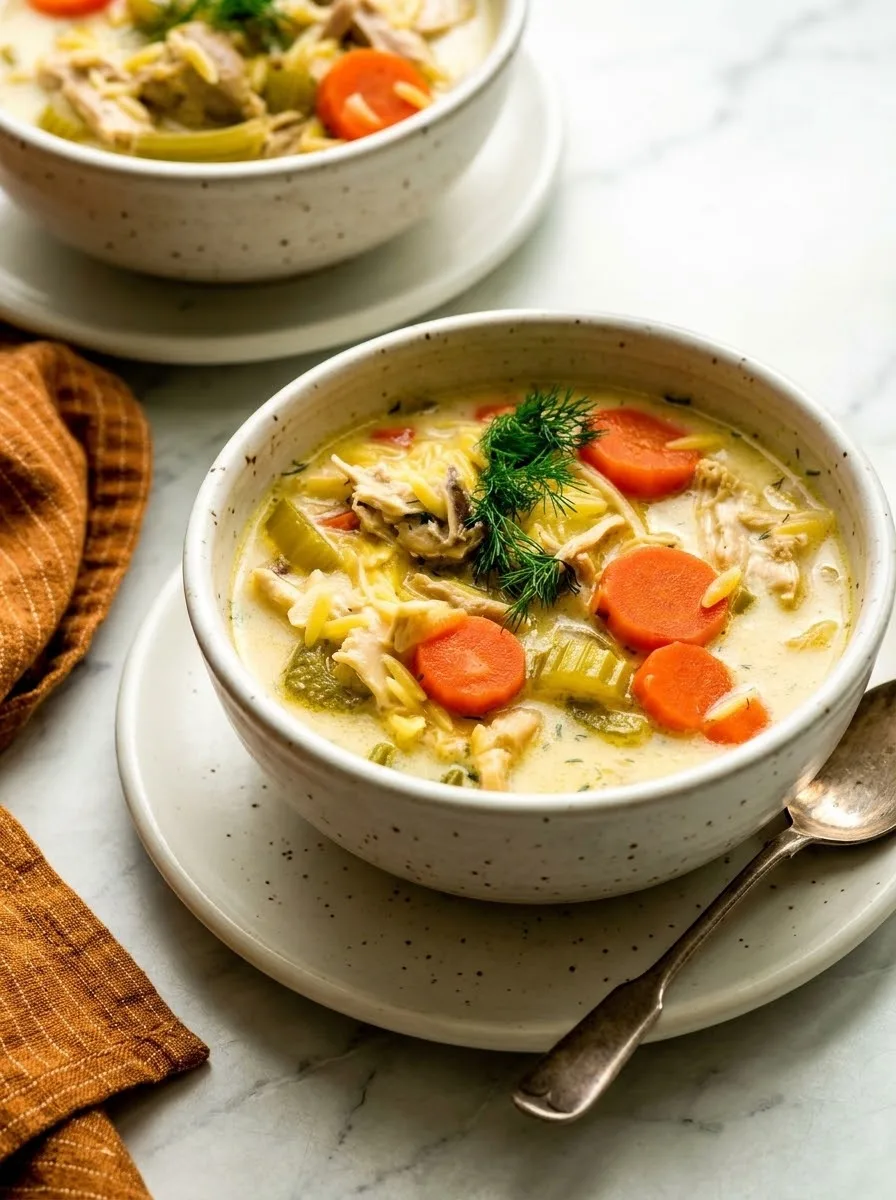

Bone-in, skin-on chicken breasts and thighs: The bones release collagen and gelatin into the broth as it simmers, creating a naturally rich, silky mouthfeel that chicken breast alone cannot achieve—and the skin, crisped skin-side down during the initial sear, renders fat that becomes the flavor base for your roux. Look for pieces that feel firm and cold at the market, with no pink or discoloration at the edges.
Salt and black pepper: These are your primary seasonings; apply them directly to the chicken before searing so they adhere during cooking and develop into the savory backbone of the entire soup. Freshly ground pepper tastes sharper and more aromatic than pre-ground, making a noticeable difference in a delicate broth.
Vegetable oil and unsalted butter: Oil reaches the high heat needed to sear the chicken without smoking, while butter added afterward melts into the rendered chicken fat and builds richness for your roux. Keep both at room temperature so they combine smoothly.
Yellow onion, carrots, and celery: This classic mirepoix trio creates the aromatic foundation; cutting them into uniform half-inch pieces ensures they soften evenly and release their sweetness into the broth without breaking down into mush. Buy firm, unblemished vegetables with no soft spots.
Garlic: Minced fresh garlic blooms quickly in hot fat and adds pungent depth; it’s cooked just until fragrant (about 30 seconds) so it brightens the soup without turning bitter or harsh.
All-purpose flour: This is your emulsifier and thickener—cooked into the fat until just lightly golden, it creates a roux that smoothly binds the cream to the broth and thickens the soup to the perfect silky consistency.
Chicken broth: Use a quality broth (or homemade if you have it); it’s the liquid canvas that carries all your layered flavors. Cold broth works fine here.
Bay leaf: Adds subtle herbal depth that rounds out the savory notes without overpowering the bright lemon and dill.
Orzo: This rice-shaped pasta absorbs just enough broth to become tender while holding its shape; check the package timing to avoid overcooking.
Heavy cream: Stirred in near the end, it creates silkiness without weighing down the soup’s fresh, citrusy character. Cold cream pours more easily and distributes evenly.
Lemon zest and fresh lemon juice: Lemon zest adds bright floral notes and visual appeal, while juice (from a fresh lemon, not bottled) provides acidity that cuts through the richness and brings all flavors into focus.
Fresh dill: Its gentle anise-like flavor and herbaceous freshness are the final flourish that makes this soup taste alive and sophisticated.
Essential Kitchen Tools You Will Need
Large Dutch oven or soup pot (at least 5-quart capacity): Deep enough to simmer chicken and broth without splashing, and wide enough to sear the chicken skin-side down in a single layer.
Cutting board and sharp knife: For uniform half-inch vegetable cuts and shredding the cooked chicken cleanly.
Wooden spoon or silicone spatula: For stirring the roux constantly so it cooks evenly, and for scraping up fond from the pot bottom.
Tongs: For safely transferring hot chicken to a plate and flipping it during searing.
Measuring spoons and cups: For precise seasoning and ingredient portions—especially critical for the flour roux and lemon juice.
Step-by-Step Instructions
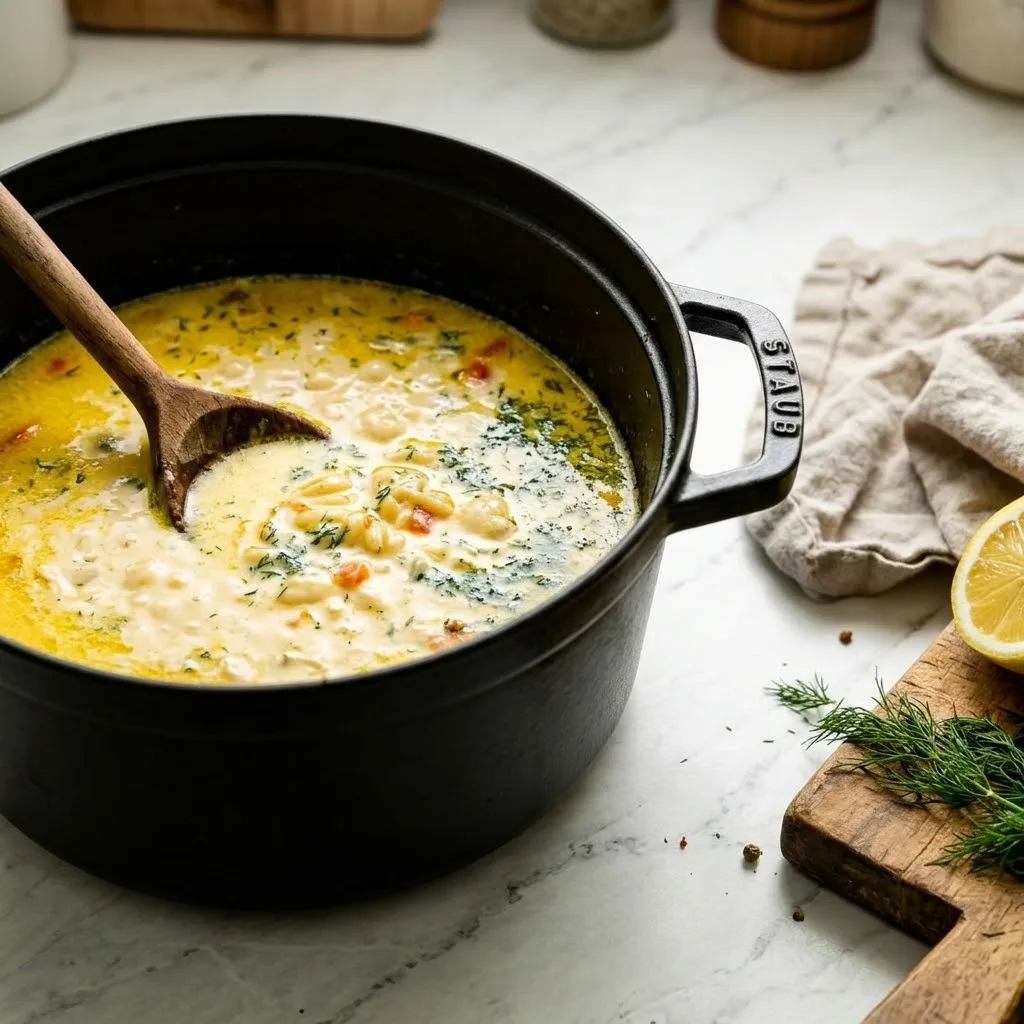
Before you begin, have all your ingredients prepped and within reach—this soup moves quickly once the chicken hits the pan, and you’ll want your onion, carrots, celery, and garlic ready to go. Use a large Dutch oven or soup pot with a heavy bottom so the heat distributes evenly and prevents scorching during the roux step.
1. Season the Chicken:
Pat the chicken dry and sprinkle both sides generously with salt and pepper. This step matters because seasoning at the start, rather than at the end, allows the salt to penetrate the meat and build deeper flavor as it cooks.
2. Sear the Chicken:
Heat the oil in your Dutch oven over medium-high heat until it shimmers. Place the chicken skin-side down and cook for 3 to 4 minutes until the skin turns deep golden brown, then flip and cook the other side for 3 to 4 minutes. Transfer the chicken to a plate and leave the flavorful fat in the pot—this fond is essential to your soup’s savory base.
3. Build the Base:
Add the butter and let it melt into the chicken fat. Stir in the onion, carrots, and celery, and cook for 2 to 3 minutes, stirring occasionally, until the vegetables just begin to soften. Add the garlic and stir constantly for about 30 seconds until fragrant, being careful not to let it brown.
4. Make the Roux:
Sprinkle the flour over the vegetables and stir constantly for about 1 minute until the mixture turns lightly golden and no dry flour remains. This roux will thicken your broth and create the signature creamy texture, so don’t skip this step or rush it.
5. Add Broth and Chicken:
Pour in the broth and use a wooden spoon to scrape up any browned bits clinging to the bottom of the pot. Add the bay leaf and return the chicken and any juices to the pot. Bring to a boil, then cover, reduce heat to low, and simmer for 15 to 20 minutes (thighs need the full 20) until the chicken is cooked through.
6. Shred the Chicken:
Transfer the cooked chicken to a cutting board. Discard the skin and bones, then shred the meat into bite-size pieces using two forks or your fingers.
7. Cook the Orzo:
Bring the soup back to a gentle boil, then add the orzo. Cook uncovered for the time listed on your pasta package, stirring frequently so the pasta doesn’t stick to the bottom.
8. Finish with Cream and Lemon:
Stir in the cream, lemon juice, and shredded chicken. Simmer for a few minutes until everything is warmed through. Fish out and discard the bay leaf, then stir in the lemon zest and dill. Taste and adjust with more salt, pepper, or lemon juice as needed.
9. Serve:
Ladle the soup into bowls and serve while hot.
Chef Pro Tips for Foolproof Results
Don’t skip the skin-side sear. Searing the chicken skin-side down for 3–4 minutes builds golden fond (those browned bits) on the pot bottom. This isn’t just flavor—it’s the foundation of your broth’s savory depth. When you deglaze with broth later, you’ll scrape up every fleck into the liquid, so don’t rush this step or flip too early.
Cook your roux to exactly lightly golden. After stirring the flour into the butter and chicken fat for about 1 minute, you’ll see a pale, sandy texture with no white streaks. This matters: undercooked flour tastes raw and muddy; overcooked roux darkens and loses its thickening power. You want that sweet spot where it smells nutty and looks just barely caramelized.
Time the orzo with the package. Orzo pasta absorbs liquid faster than you’d expect, so don’t eyeball it. Stir frequently while cooking to prevent sticking to the pot bottom, and check the package timing for your brand—most finish in 8–10 minutes. Test a strand; it should bend slightly but not fall apart.
Add cream and lemon juice at the end. Simmering heavy cream for extended periods can break or separate. Wait until the very last steps to stir it in along with the shredded chicken and lemon juice. This timing keeps the soup silky and ensures the bright citrus and dill aren’t muted by prolonged heat.
Scale by doubling the bone-in chicken only. If you’re feeding eight instead of six, use about 3½ lb chicken but keep all other ingredients the same—the broth-to-solids ratio stays balanced, and your cooking times barely shift.
Common Mistakes to Avoid

Overcooking the chicken before shredding. Many cooks simmer bone-in chicken for 25–30 minutes thinking more time means better flavor. The truth: chicken reaches a safe internal temperature of 165°F in about 15–20 minutes depending on thickness. Beyond that, the meat dries out and shreds into stringy, tough pieces. Use tongs to test doneness by piercing the thickest part; juices should run clear.
Adding orzo before the broth returns to a boil. If you stir in orzo while the soup is merely simmering, the pasta absorbs liquid unevenly and turns mushy or gluey. Bring the broth back to a gentle boil first, then add the orzo so it cooks at the right pace and stays tender.
Stirring in lemon juice too early. Lemon juice can curdle heavy cream if simmered together for more than a few minutes. Add it in the final step, after the cream is warm and everything else is nearly done.
Make-Ahead Timeline & Storage Guide
How Far Ahead Can You Prep This?
I always prep the base of this soup a full day ahead—it actually tastes better that way. Cook through the shredding step (after the chicken comes off the bone), then let it cool completely before transferring to an airtight container and refrigerating. The flavors meld overnight, and the broth becomes even richer. When you’re ready to serve, simply reheat gently, then add the orzo, cream, and lemon juice fresh. This keeps the pasta tender and the bright citrus notes from fading.
If you want an even simpler route, you can prep your mirepoix (onion, carrots, and celery) and mince your garlic up to 24 hours ahead—store them separately in airtight containers in the fridge so you’re just a few steps away from dinner.
Fridge Storage, Freezing & Reheating
Cooled soup keeps in an airtight container for up to 3 days in the refrigerator. If you’re freezing, store it in an airtight freezer-safe container for up to 2 months—I recommend freezing the soup base (everything except the orzo and cream) since the pasta and dairy don’t reheat as smoothly after freezing.
To reheat from the fridge, warm gently over medium-low heat, stirring occasionally, until steaming. Add a splash of chicken broth if the soup has thickened too much. If reheating from frozen, thaw overnight in the fridge first, then warm gently as above. Fresh orzo, cream, and lemon juice added during reheating ensure every bowl tastes as bright and silky as the day you made it.
Serving Ideas & Holiday Pairings
I always serve this soup in wide, shallow bowls because it shows off the creamy broth and tender shreds of chicken beautifully. A crusty slice of bread is non-negotiable—it’s perfect for soaking up every last spoonful. If you’re leaning toward a lighter pairing, a simple green salad with a bright vinaigrette cuts through the richness of the cream and echoes the soup’s lemon-forward brightness.
For a complete weeknight meal, I plate the soup first, then add a small side salad or some roasted vegetables on the side. The dill garnish on top makes it feel finished and restaurant-worthy, even though you’ve only spent 65 minutes total in the kitchen. If you’re serving this to guests, ladle it at the table—there’s something inherently welcoming about a steaming bowl of homemade soup.
Simple garnish & plating ideas:
Float a small dollop of crème fraîche and a few fronds of fresh dill on each bowl for visual interest
Serve with lemon wedges on the side so guests can add extra brightness to taste
Pair with a crisp sparkling water or iced herbal tea to complement the citrus notes
For holiday gatherings, offer alongside warm dinner rolls or focaccia for dipping
Frequently Asked Questions
Can I double this recipe for a crowd?
Absolutely. Simply double all ingredients and use a large Dutch oven or heavy-bottomed pot. The cooking time remains roughly the same—just allow an extra few minutes for the larger volume to come to a boil and for the orzo to cook through.
Can I make this ahead of time?
Yes. Prepare the soup through the shredding step and refrigerate it for up to 2 days. When you’re ready to serve, reheat gently over medium-low heat, then add the orzo, cream, and lemon juice fresh to ensure the pasta stays perfectly tender and the bright flavors stay vibrant.
How do I store leftovers?
Cool the finished soup completely and transfer it to an airtight container. It keeps for up to 3 days in the refrigerator. When reheating, warm it gently over medium-low heat and add a splash of broth if the consistency has thickened.
Can I use boneless chicken instead?
You can, though you’ll lose some of the deep, savory flavor that bone-in chicken brings. If using boneless breasts, reduce the simmering time to 10–12 minutes to prevent them from drying out.
What if my soup tastes too creamy?
Thin it with additional broth, a splash at a time, until you reach your preferred consistency. You can also brighten it with an extra squeeze of lemon juice or a pinch more fresh dill to balance the richness.
Creamy Lemon Chicken Orzo Soup
Ingredients
Method
- Season the chicken all over with the salt and pepper.
- In a large Dutch oven or soup pot, heat the oil over medium-high heat until shimmering. Add the chicken, skin-side down, and cook until golden, 3 to 4 minutes per side. Transfer the chicken to a plate and set aside (don’t discard the flavorful fat in the pot).
- Add the butter to the pan and let it melt into the chicken fat. Add the onion, carrots, and celery, and cook, stirring occasionally, until they just start to soften, 2 to 3 minutes. Add the garlic and cook, stirring constantly, until fragrant, about 30 seconds. Do not brown.
- Sprinkle the flour over the vegetables and cook, stirring constantly, until lightly golden and no dry bits of flour remain, about 1 minute.
- Add the broth and scrape up any browned bits from the bottom of the pot. Add the bay leaf and return the chicken and any accumulated juices to the pot. Bring to a boil, cover, and reduce the heat to low. Simmer until the chicken is cooked through—about 15 minutes for breasts and 20 minutes for thighs.
- Use tongs to transfer the chicken to a cutting board. Discard the skin and bones, then shred the meat into bite-size pieces.
- Bring the soup back to a gentle boil and add the orzo. Cook, uncovered, stirring frequently so it doesn’t stick, until al dente (check the package for timing).
- Stir in the cream, the lemon juice, and shredded chicken, and simmer a few minutes more until everything is warmed through.
- Fish out and discard the bay leaf. Stir in the lemon zest and dill, then taste and adjust seasoning with more salt, pepper, and lemon juice if needed.
- Ladle the soup into bowls and serve.
 Mueller 10-in-1 Vegetable Chopper – Slice, Dice & Mince Effortlessly!