Key Ingredients & Why Each One Matters
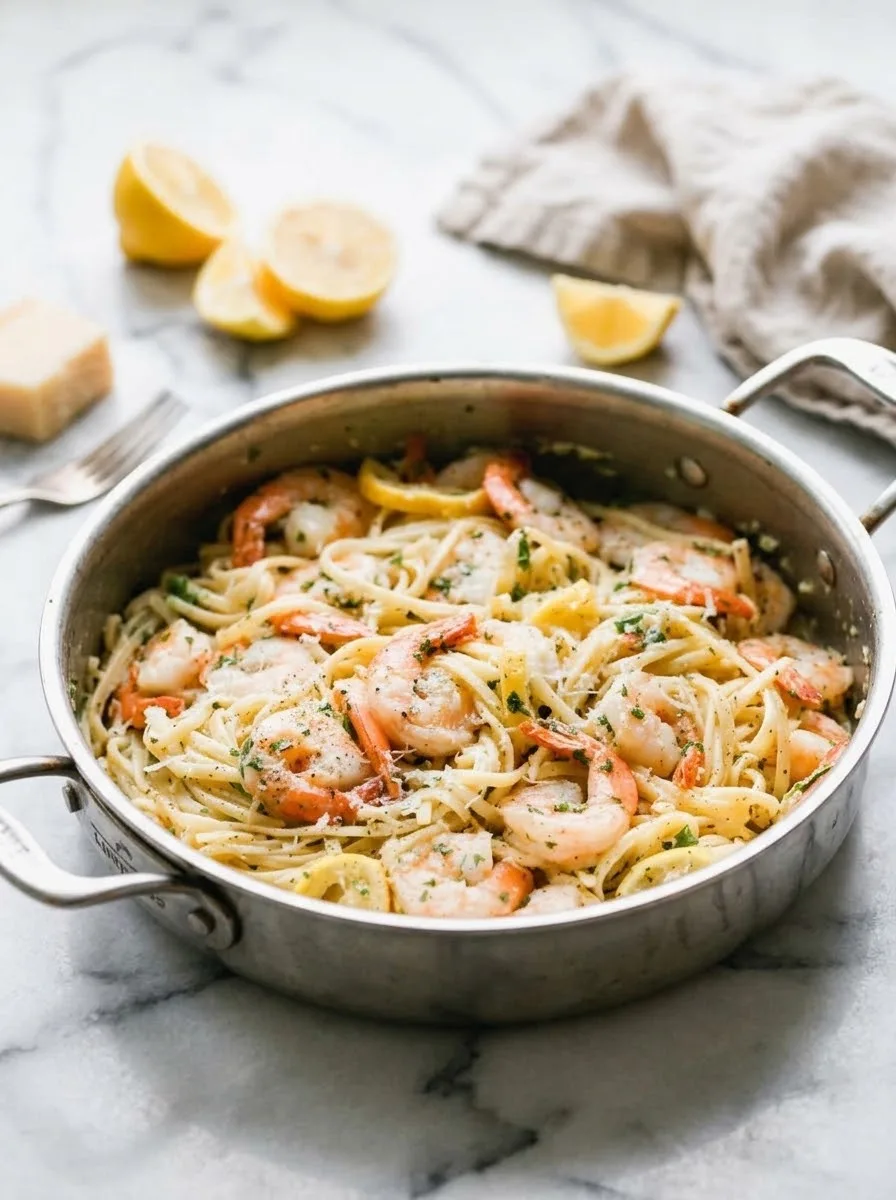
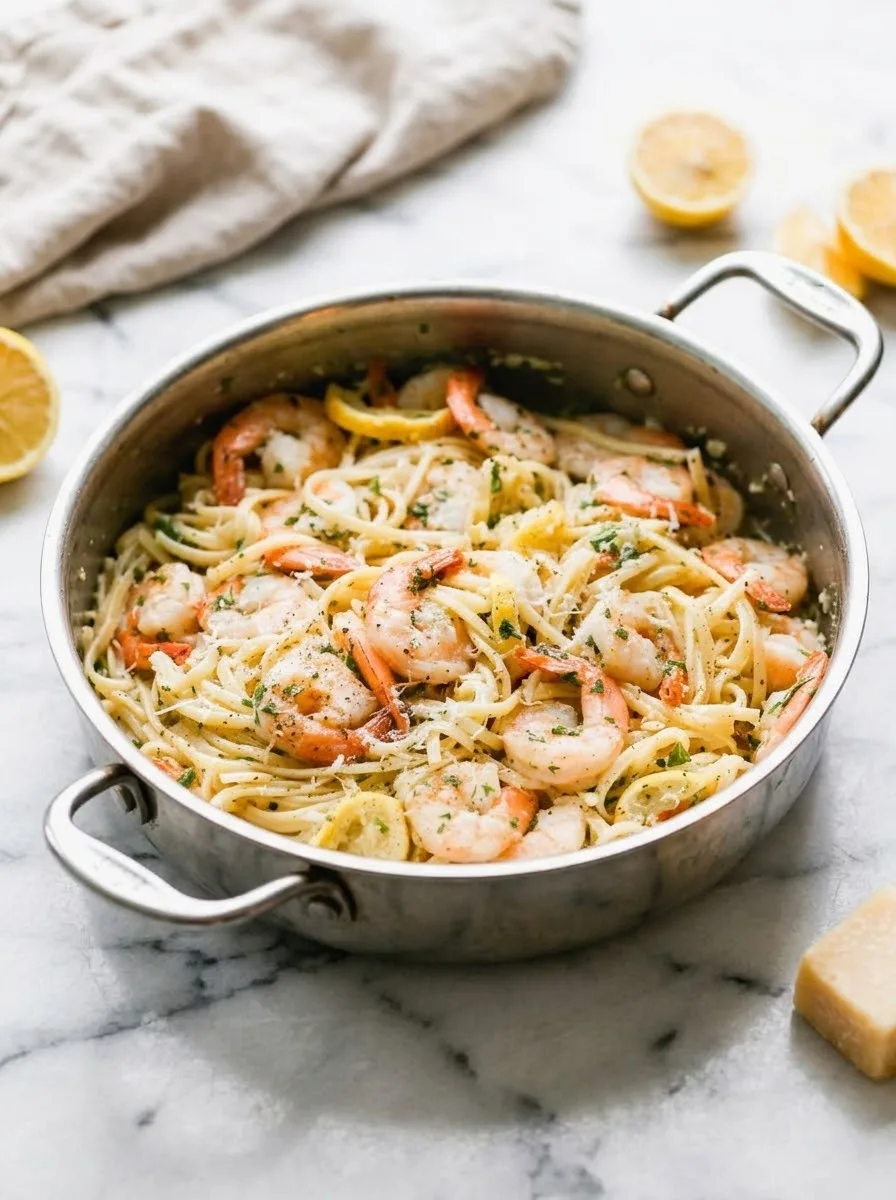
Linguine Noodles: This long, flat pasta has just enough surface area to cradle the buttery, lemony sauce without becoming too heavy. Cook them to al dente so they maintain a slight firmness when tossed with the shrimp and pan juices.
Unsalted Butter: Butter forms the silky base of your sauce and carries the garlic’s flavor beautifully. Using unsalted lets you control the seasoning throughout the dish, and melting it gently over medium-low heat prevents it from browning and turning bitter.
Olive Oil: Combined with the butter, olive oil raises the smoke point so your aromatics won’t scorch. It adds a fruity depth that complements the shrimp and lemon without overpowering them.
Garlic: Minced fresh garlic releases its pungent, sweet compounds quickly when sautéed—just 1 minute over medium-low heat is enough to perfume the oil without burning, which would turn the garlic acrid and ruin the dish.
Large Shrimp: About 20 shrimp per pound means each one is meaty enough to stay tender during the brief sauté. Peeled and deveined shrimp means they’re ready to go straight into the pan, cutting your active cooking time down to under 5 minutes.
Salt & Freshly Ground Black Pepper: Season the shrimp before sautéing so the seasoning penetrates the delicate flesh, then taste and adjust once more after adding the lemon juice and parsley.
Fresh Parsley: Chopped parsley brightens the entire dish with herbaceous freshness and should be added off the heat to preserve its delicate flavor and color.
Lemon Zest & Fresh Lemon Juice: The zest adds concentrated citrus aroma, while the juice provides acidity that lifts the richness of the butter and prevents the sauce from feeling heavy. Both are added after removing from heat so the heat doesn’t cook off their bright qualities.
Lemon Slices: Thin half-rounds of lemon add visual elegance and an optional tartness boost for each bite without requiring extra squeezing at the table.
Crushed Red Pepper Flakes: A pinch of heat balances the richness and brightness, letting each layer of flavor shine rather than blend into one flat note.
Freshly Grated Parmesan Cheese: Grated fresh (not pre-shredded) melts smoothly into the warm pasta and absorbs the lemon butter sauce, adding savory depth and a creamy finish.
Essential Kitchen Tools You Will Need
Large Pot: Holds at least 4 quarts for boiling the linguine with plenty of water and room for the noodles to move freely.
Extra-Large Skillet: A 12-inch or larger skillet gives your shrimp space to sauté evenly without crowding, which is essential for quick, even cooking and browning.
Measuring Spoons & Cups: Precision with the butter, oil, and lemon juice ensures the sauce balances correctly and doesn’t become too greasy or too acidic.
Microplane Zester: Zests the lemon without picking up bitter white pith, giving you bright, pure citrus flavor.
Chef’s Knife: A sharp blade makes mincing garlic and chopping parsley quick and safe, and thinly slicing lemon half-rounds is much easier with a blade that cuts cleanly.
Step-by-Step Instructions
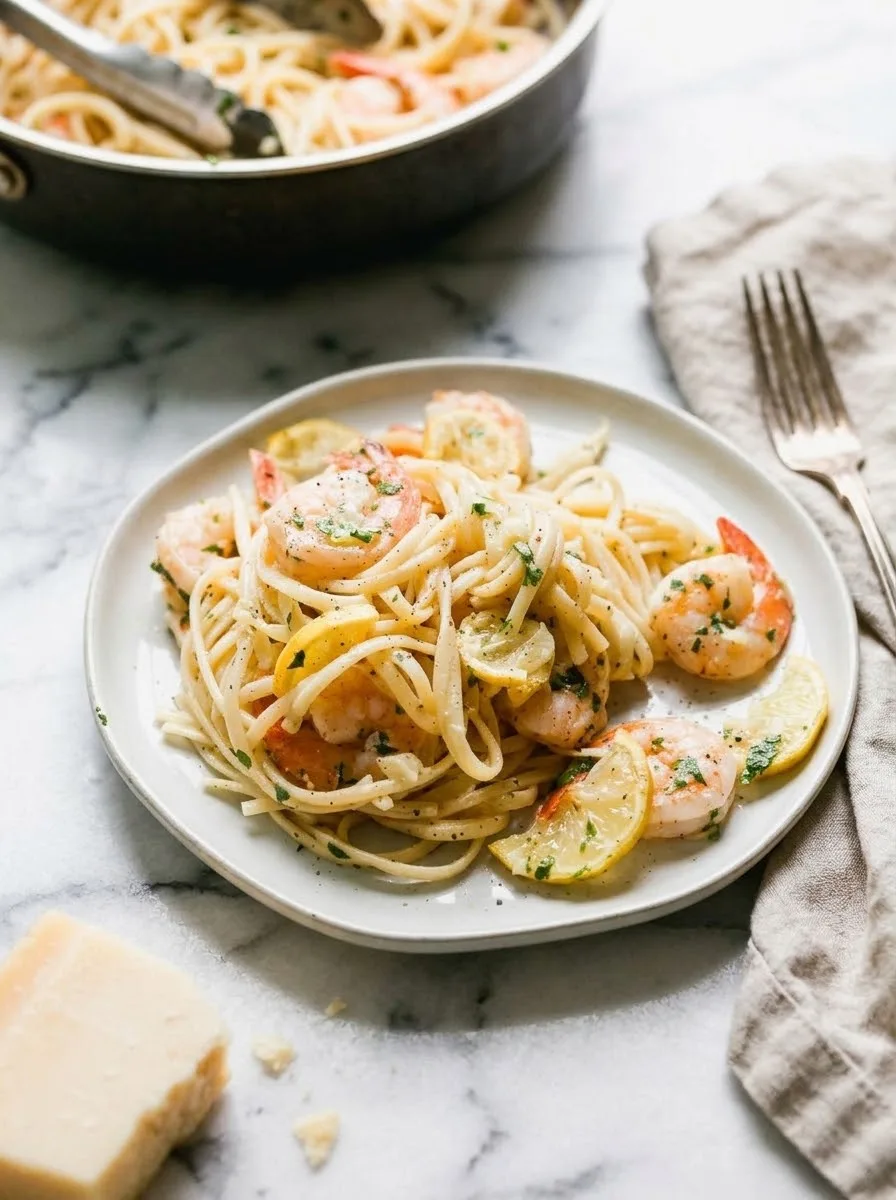
Before you start, make sure your shrimp are peeled and deveined and your ingredients are prepped and within arm’s reach—this dish moves quickly once the skillet hits the heat.
1. Cook the Linguine:
Bring a large pot of water to a boil, then add a pinch of oil and salt. Add the linguine and cook according to package directions until al dente. Drain and set aside, but keep the pot nearby since you’ll be combining everything soon.
2. Season the Shrimp:
Pat the shrimp dry with paper towels, then season them generously with salt and pepper. Set them on a plate so they’re ready to go the moment your skillet is hot.
3. Build the Garlic Base:
Add the butter and olive oil to an extra-large skillet and place it over medium-low heat. Once the butter has melted and the mixture is warm, add the minced garlic and sauté for exactly 1 minute, stirring constantly. You’re looking for the garlic to become fragrant and just barely golden—this is the critical moment to watch it carefully because garlic burns fast and bitterness will ruin the dish.
4. Sauté the Shrimp:
Add the seasoned shrimp to the skillet and toss them in the butter-oil mixture. Sauté for 4 to 5 minutes, tossing frequently to ensure even cooking. The shrimp are done the moment they turn bright pink and curl slightly—this takes less time than you’d think, so stay focused. Remove the skillet from the heat immediately; carryover heat will continue cooking them even off the flame.
5. Finish Off the Heat:
Add the chopped parsley, lemon zest, lemon juice, lemon slices, and crushed red pepper flakes to the warm shrimp. Toss everything gently to combine, letting the residual heat warm the fresh ingredients without cooking them further. Taste and adjust salt and pepper as needed.
6. Bring It Together:
Add the drained linguine directly to the skillet with the shrimp and sauce. Toss gently until the pasta is evenly coated and the flavors meld. Sprinkle the freshly grated parmesan cheese over the top and toss once more with care—you want to combine everything without breaking the shrimp into pieces.
7. Serve:
Divide between plates or bowls while everything is still warm. The residual heat will keep the dish at the perfect temperature on the plate.
Chef Pro Tips for Foolproof Results
Keep your heat low and your timing tight. Medium-low is non-negotiable here—it’s the difference between silky butter and broken oil. If your pan starts sizzling aggressively when you add the butter and olive oil, dial it back. I learned this the hard way after burning garlic more times than I’d like to admit. The goal is a gentle sizzle, not a rolling boil.
Mince your garlic uniformly so it cooks evenly. Uneven pieces mean some turn golden while others burn to bitter ash. That 1-minute window is tight, so uniform size matters. I use a sharp knife and mince mine to about the size of a small pea.
Don’t skip the visual cue—pink and slightly curled. Shrimp continue cooking briefly after you remove the pan from heat (carryover cooking), so pulling them at the first blush of pink gives you that tender texture. If you wait for them to look fully cooked, you’ve already overshot it. This is where a 20-pound batch for a dinner party behaves exactly like a single-serving batch.
Finish off the heat with acid and herbs. Once you remove the skillet from the heat, add your lemon juice, zest, parsley, and red pepper flakes. This prevents the heat from cooking off the bright, fresh flavors you’ve just added and keeps your shrimp tender.
Drain your pasta just before tossing. A little starch clinging to the noodles helps the sauce coat beautifully without pooling at the bottom of the pan.
Common Mistakes to Avoid
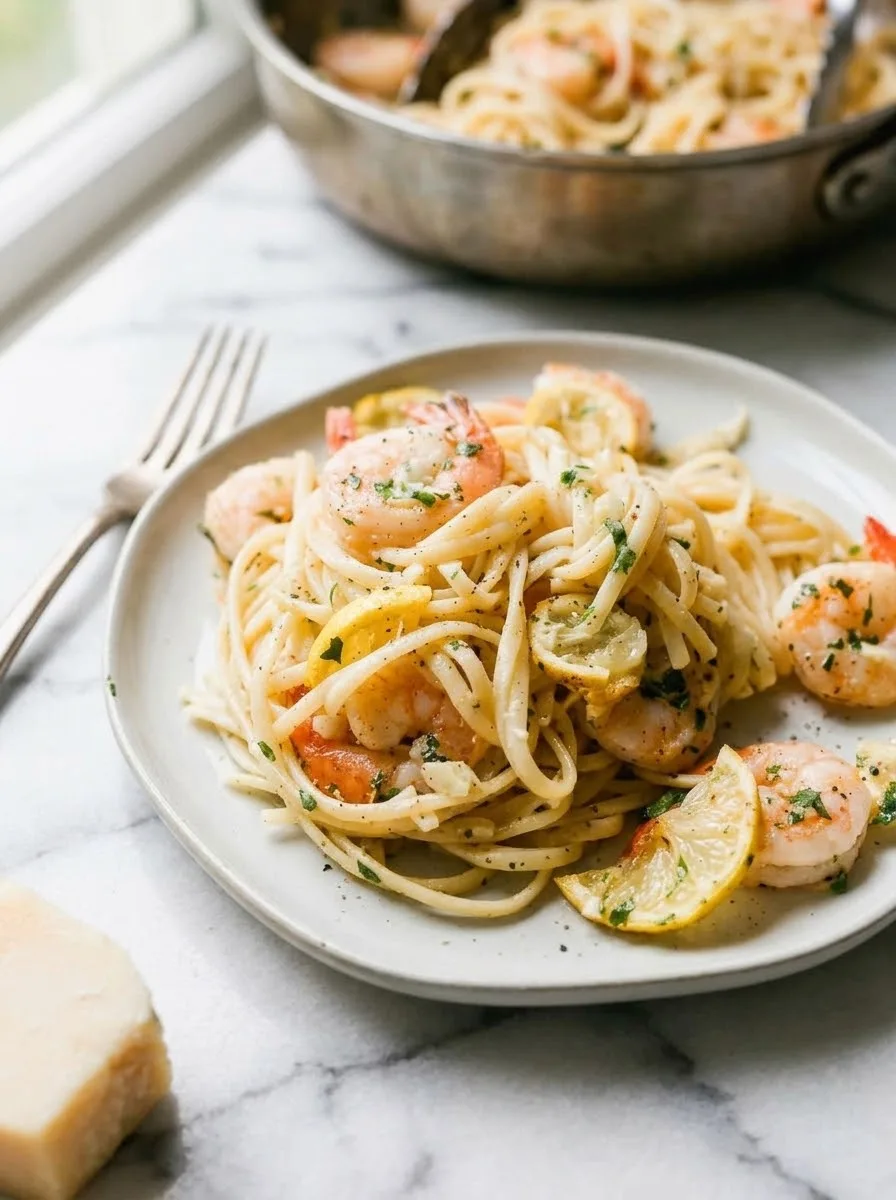
Burning the garlic. A minute feels impossibly short, but garlic blackens faster than you think at any temperature above a gentle sizzle. Watch it constantly and stir. Burnt garlic tastes acrid and bitter—there’s no fixing it except starting over.
Overcooking the shrimp. This is the number-one culprit for rubbery, tough results. The moment they turn pink and start to curl, they’re done. Leaving them in the pan “just a little longer” can swing you from tender to inedible in 30 seconds.
Crowding the skillet. If your shrimp overlap or pile on top of each other, the bottom layer steams instead of sautéing, and you lose that delicate texture. Use an extra-large skillet and cook in a single layer, tossing often for even, quick cooking.
Make-Ahead Timeline & Storage Guide
How Far Ahead Can You Prep This?
The beauty of this dish is that nearly everything can be prepped in advance without sacrificing quality. Peel and devein your shrimp up to 8 hours ahead and store them in an airtight container in the coldest part of your fridge. Mince your garlic, zest your lemon, and chop your parsley the morning of—this takes the pressure off when you’re ready to cook. Even your linguine water can be measured and waiting, so when dinner time hits, you’re genuinely 20 minutes away from plating.
If you’re planning further out, you can cook the entire dish 1 day in advance. The flavors actually deepen as they meld overnight, though the shrimp’s texture will be slightly softer than freshly made.
Fridge Storage, Freezing & Reheating
Store leftovers in an airtight container for up to 2 days. The pasta will absorb some of the sauce, which I actually love—it becomes more cohesive and flavorful the next day. To reheat, place the entire dish in a large skillet over low heat with a splash of fresh lemon juice. Stir gently for 3–4 minutes until warmed through. The lemon juice restores moisture and prevents the shrimp from tightening further.
I don’t recommend freezing this dish. The delicate shrimp texture suffers significantly when thawed, and the pasta becomes mushy. If you must freeze, transfer to a freezer-safe airtight container for up to 1 month, but expect compromised results.
Serving Ideas & Holiday Pairings
I’ve learned that the magic of scampi lies not just in what’s on the plate, but in how you present it and what you serve alongside it. This dish shines brightest when you lean into its elegance—plate the linguine in shallow bowls, letting the buttery lemon sauce pool around the noodles, then top generously with that final scatter of fresh parmesan. A light grind of black pepper and a pinch of red pepper flakes right before serving adds visual warmth and reminds your guests that this is restaurant-quality food made in your own kitchen.
The beauty of scampi is its flexibility as a centerpiece. Pair it with a simple arugula salad dressed in lemon vinaigrette to brighten the richness, or serve alongside crusty bread for soaking up every drop of that luxurious sauce. For a complete, elegant meal without fuss, consider these sides:
Crusty garlic bread — perfect for capturing the buttery sauce
Steamed or roasted asparagus — adds color and a light, vegetal balance
Simple green salad with lemon dressing — cuts through the richness beautifully
Roasted baby potatoes — a heartier option if you need something more substantial
For beverage pairings, reach for a crisp white like Sauvignon Blanc or Pinot Grigio—both have enough acidity to complement the lemon and cut through the butter without overpowering the delicate shrimp. This dish also works beautifully as a dinner party showstopper because you can prep everything hours ahead and have it on the table in under 20 minutes, leaving you time to actually enjoy your guests.
Frequently Asked Questions
Can I make this ahead of time?
Yes! Peel, devein, and store your shrimp in an airtight container up to 8 hours ahead. Mince your garlic and zest your lemon the morning of, and chop your parsley just before cooking. The pasta and sauce come together fresh in the final 20 minutes.
Can I double this recipe for a crowd?
Absolutely. Use two extra-large skillets (or work in batches) to avoid overcrowding, which prevents the shrimp from cooking evenly. Everything else scales directly—just double the ingredients and cooking time remains the same since you’re using proper pan space.
How do I know when the shrimp are done?
They’re done the moment they turn pink and curl slightly, about 4–5 minutes total. Overcooked shrimp become tough and rubbery, so don’t skip this step—remove the pan from heat as soon as they’re pink.
How should I store leftovers?
Transfer cooled scampi to an airtight container and refrigerate for up to 2 days. Reheat gently in a skillet over low heat with a splash of lemon juice to restore moisture and prevent the shrimp from toughening.
Why do you remove the pan from heat before adding lemon juice?
The acid in fresh lemon juice will toughen shrimp if they’re still cooking. Removing from heat first preserves their tender texture while still allowing the bright, acidic flavors to brighten the entire dish.
Garlic Butter Shrimp Scampi Linguine
Ingredients
Method
- Bring a large pot of water to boil. Add a little bit of oil and salt to the boiling water and cook the linguine according to package instructions.
- Meanwhile, season the shrimp with salt and pepper and set aside.
- Add the butter and olive oil to an extra-large skillet over medium-low. Once the butter has melted, add the garlic and sauté for 1 minute, being careful not to burn it.
- Add the shrimp and sauté just until they turn pink, about 4-5 minutes, tossing often.
- Remove from the heat and add the parsley, lemon zest, lemon juice, lemon slices, and red pepper flakes.
- Toss to combine. Season with additional salt and pepper, if needed.
- When the pasta is cooked, drain the water and add the noodles to the sauté pan.
- Top with fresh parmesan cheese and toss everything gently to combine. Serve.
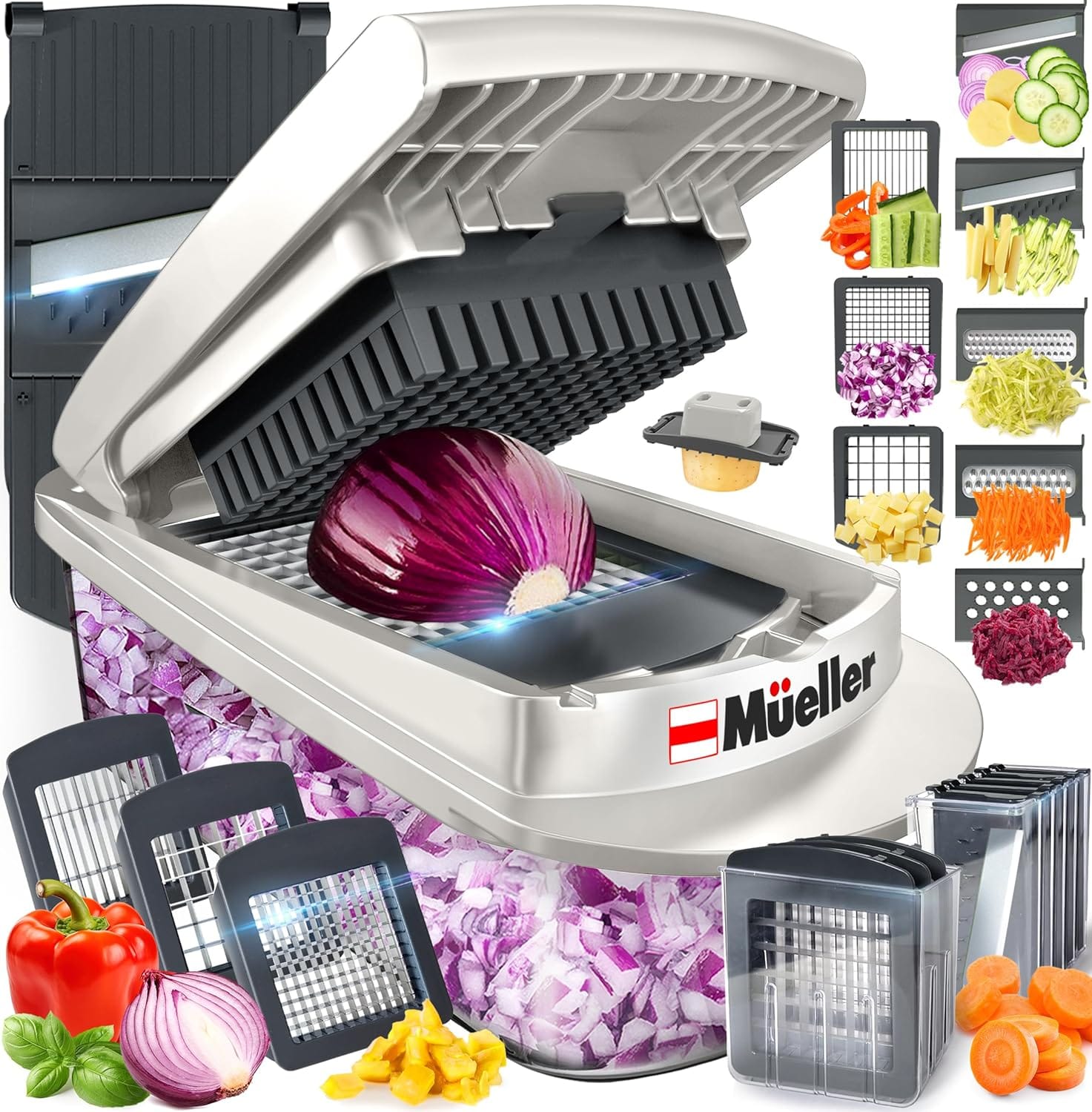
 Mueller 10-in-1 Vegetable Chopper – Slice, Dice & Mince Effortlessly!