Key Ingredients & Why Each One Matters
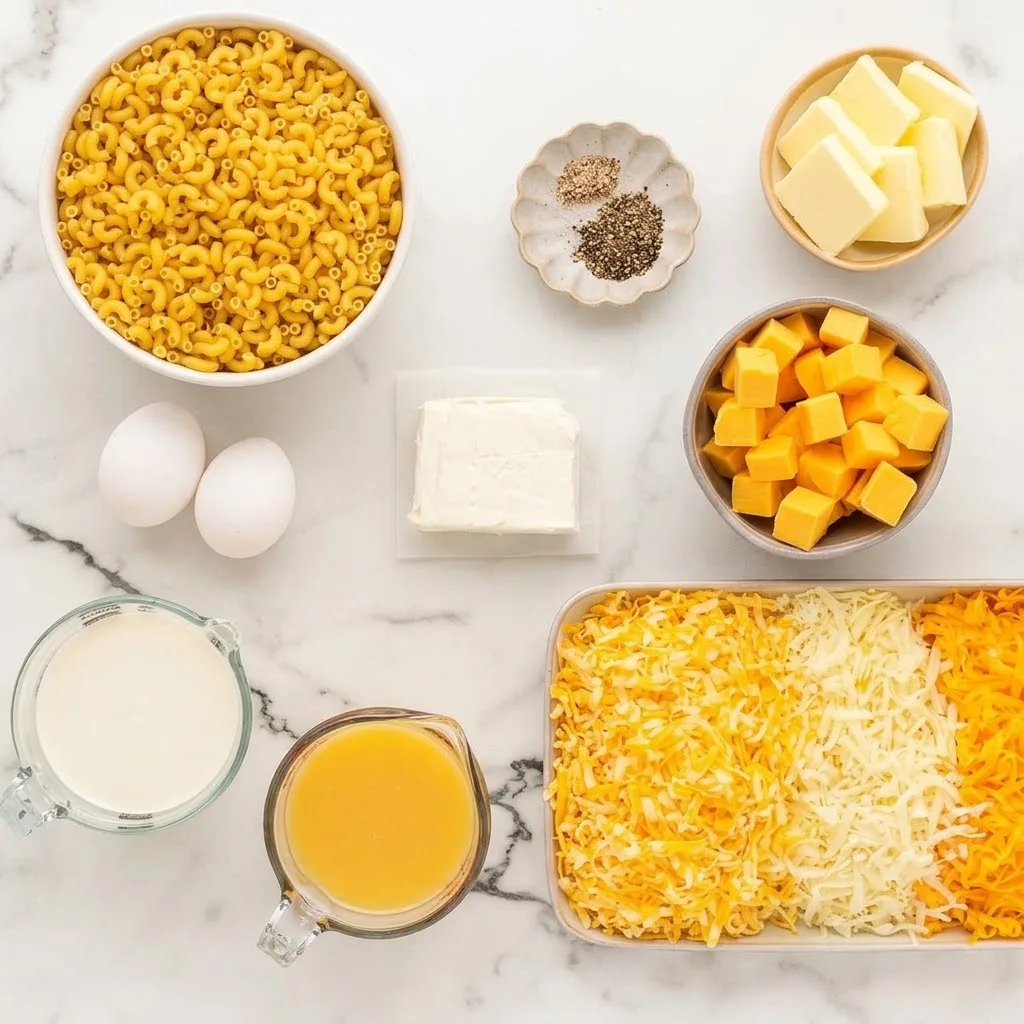
Elbow Macaroni: The pasta shape cradles sauce beautifully and cooks to al dente consistency without breaking apart during mixing. Buy dried pasta from any mainstream brand—there’s no quality difference that matters here.
Evaporated Milk: This concentrated milk product is the secret to silky, lump-free sauce; its milk solids prevent curdling when heated with eggs and cheese. It’s essential to whisk it cold before adding to warm pasta to ensure smooth emulsification.
Heavy Cream: Split between the custard base and final pour-over, cream adds richness and helps prevent the sauce from becoming grainy or separating during baking. Cold cream whisked into the egg mixture creates a stable emulsion.
Eggs: Room-temperature eggs incorporate smoothly into the milk mixture and act as a binder that sets the custard during baking, giving the dish its signature creamy, structured texture. Never skip this step—it’s what separates this from runny, broken cheese sauce.
Sharp Cheddar: The backbone of flavor, sharp cheddar delivers tangy, complex notes that balance the milder cheeses. Buy pre-shredded for convenience—the anti-caking agents don’t affect the final dish.
Colby Jack: This semi-hard cheese melts smoothly and contributes mild sweetness that rounds out sharp cheddar’s bite without overpowering delicate mozzarella.
Mozzarella: Added for its stretch and mild flavor, mozzarella prevents the sauce from becoming one-dimensional while contributing to that signature creamy pull.
Velveeta: This processed cheese is the unsung hero—it contains emulsifiers that guarantee creamy consistency and prevent the sauce from breaking or separating during baking, something pure dairy cheese alone cannot do.
Cream Cheese: Softened at room temperature, it melts into hot drained pasta and creates a luxurious base layer before the custard mixture is added.
Butter: Melted into the warm pasta alongside cream cheese, it coats every strand and helps carry flavor and fat through the dish.
Black Pepper & Nutmeg: A whisper of nutmeg adds warmth without announcing itself; black pepper provides gentle heat that balances rich cheese and cream.
Essential Kitchen Tools You Will Need
9×13-inch baking dish: Standard ceramic or glass dish that holds the entire casserole with proper depth for even baking.
Large pot: Essential for boiling pasta in salted water without crowding.
Whisk: Critical for smooth, lump-free custard when combining evaporated milk, cream, and eggs.
Large mixing bowl: Needed to hold the warm pasta and cream cheese mixture while stirring.
Aluminum foil: Covers the dish for the first 25 minutes to prevent over-browning while the center sets.
Step-by-Step Instructions
Before you start, position an oven rack in the center of your oven and preheat to 350°F. Have your 9×13-inch baking dish lightly greased and ready to go—this timing matters because you’ll be working with warm pasta.
1. Cook the Pasta:
Bring a large pot of salted water to a boil and add the elbow macaroni. Cook until just al dente (follow the package timing, usually 7–8 minutes), then drain well in a colander. Do not rinse the pasta—the starch on the surface helps the sauce cling and emulsify.
2. Melt Butter and Cream Cheese:
While the pasta is still warm, add the softened cream cheese and butter directly to the drained macaroni in the pot. Stir continuously for about 1–2 minutes until both are completely melted and evenly incorporated throughout. The residual heat from the hot pasta will melt these without any additional cooking.
3. Whisk the Custard Base:
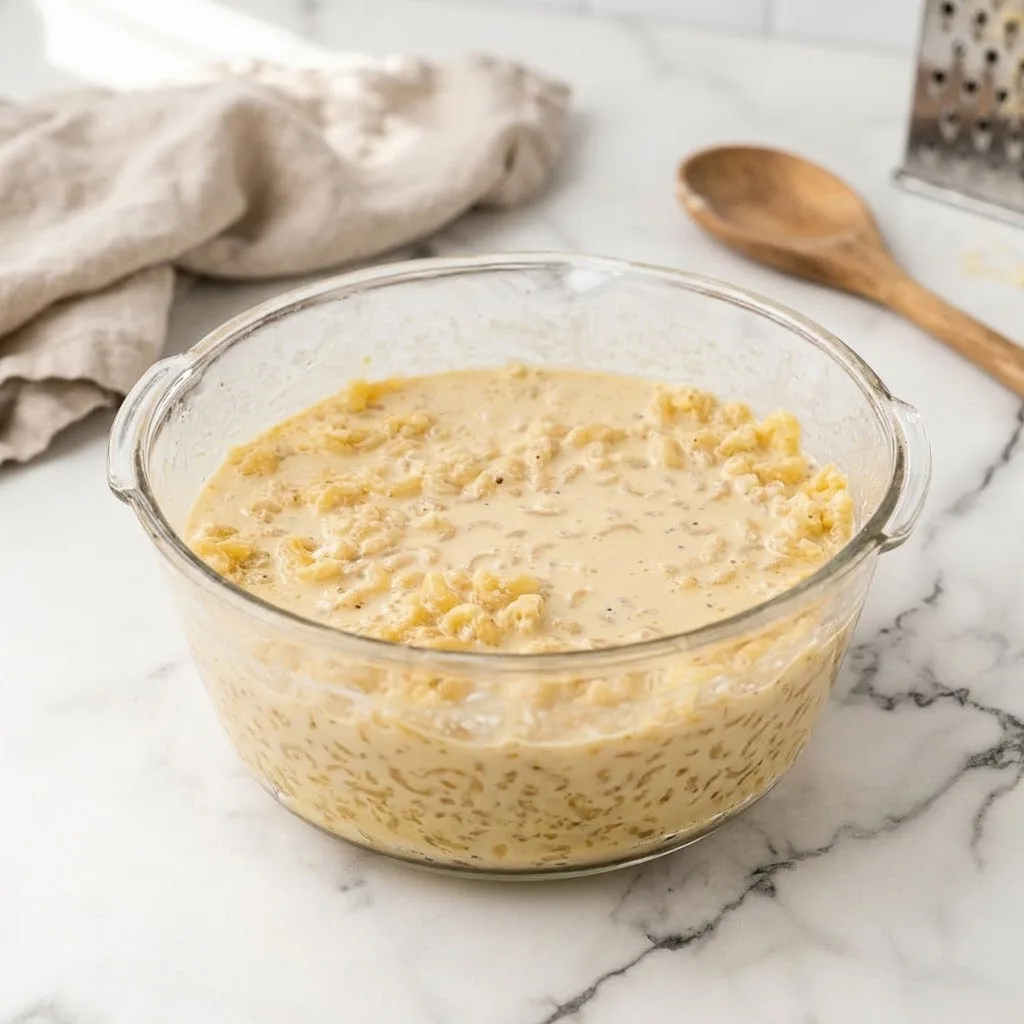
In a separate bowl, whisk together the evaporated milk, 1 cup heavy cream, eggs, black pepper, and nutmeg until completely smooth with no lumps. This whisking step is critical—it emulsifies the ingredients and prevents the sauce from becoming grainy during baking.
4. Combine Pasta and Sauce:
Pour the milk-and-egg mixture over the warm macaroni and gently stir to combine. Add the Velveeta, mozzarella, 2 cups sharp cheddar, and 1 cup Colby Jack, folding gently until all the cheese is evenly distributed and no streaks remain.
5. Transfer to Baking Dish:
Pour the entire macaroni mixture into your prepared 9×13-inch baking dish. Sprinkle the remaining ½ cup sharp cheddar and ½ cup Colby Jack evenly over the top. Pour the remaining ½ cup heavy cream in a thin, even layer over the surface.
6. Covered Bake:
Cover the dish tightly with foil and place in the preheated 350°F oven. Bake for 25 minutes—the foil traps steam and keeps the top from drying out during this initial phase.
7. Finish Uncovered:
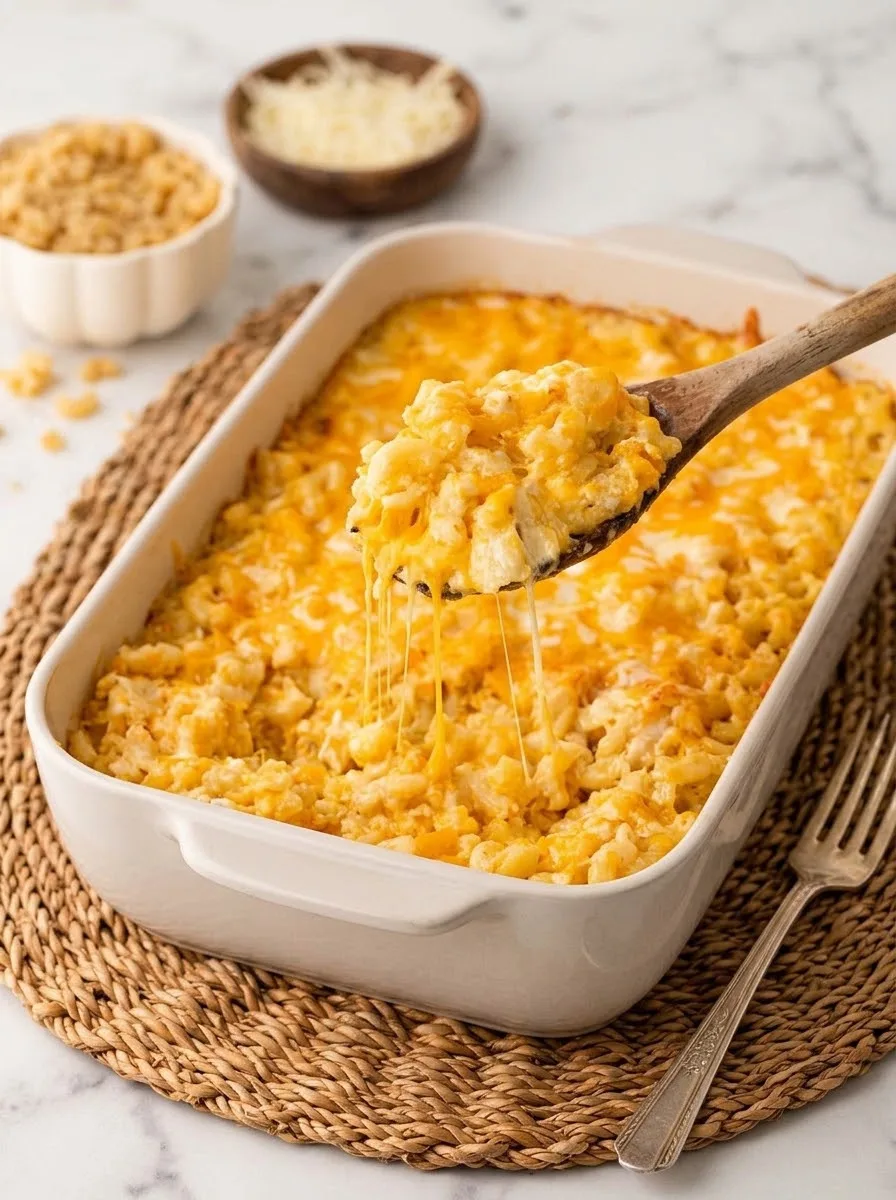
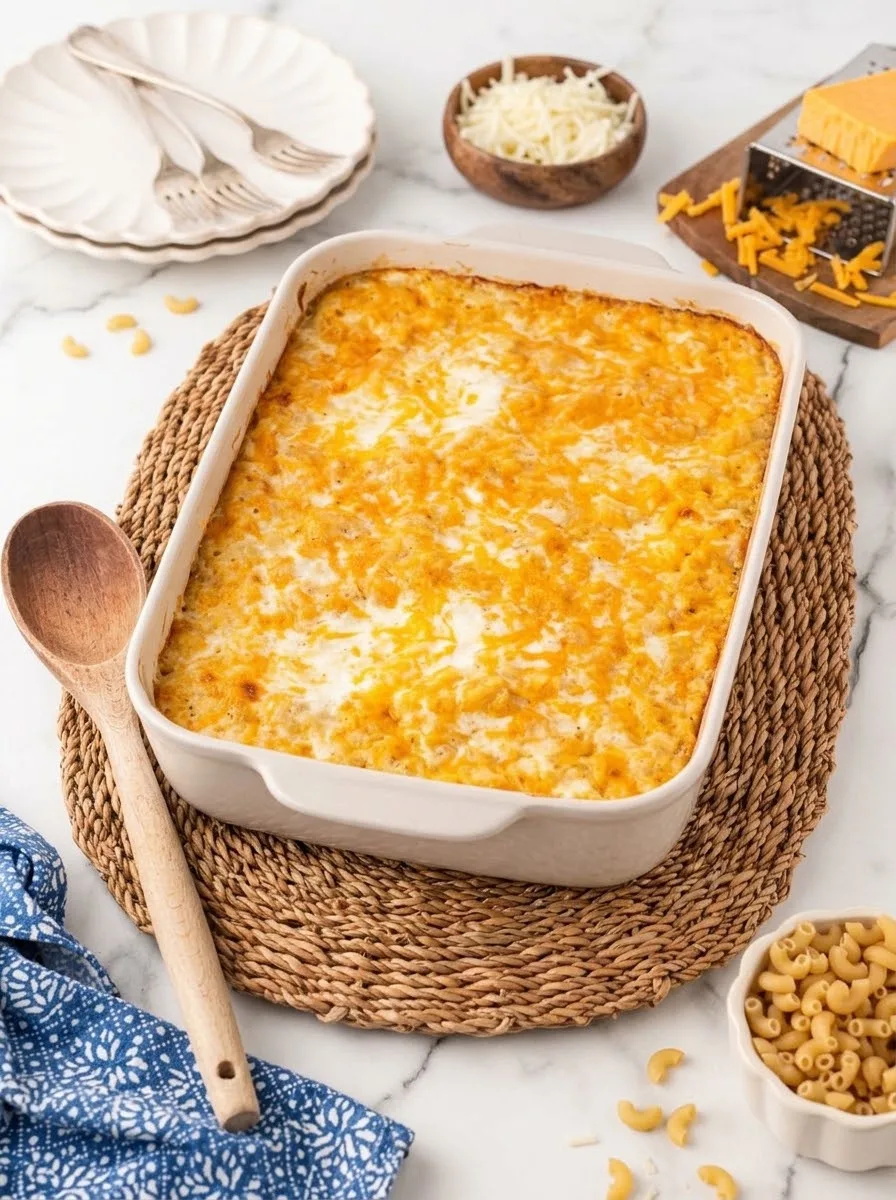
Remove the foil and bake for another 15 minutes, or until the top is golden brown and the center is hot and creamy when you gently press it with the back of a spoon. The cheese on top should be bubbling around the edges.
8. Rest Before Serving:
Remove from the oven and let rest for 10–15 minutes. This allows the custard to set slightly, making it easier to scoop and serve while staying creamy inside.
Chef Pro Tips for Foolproof Results
Don’t skip the al dente pasta step. Cooking the macaroni just shy of fully tender is non-negotiable here. Overcooked pasta will turn mushy during baking, and undercooked pasta stays gritty no matter how silky your sauce. I test by biting a piece—it should have a slight resistance in the center. The residual heat from the warm pasta will carry the cooking forward as you fold in butter and cream cheese.
Add butter and cream cheese to hot pasta immediately after draining. This timing matters because the residual heat melts both completely without lumps, creating an even base layer. If you wait even five minutes, the pasta cools and the cheeses incorporate poorly, leaving streaks of unmelted cream cheese throughout your casserole.
Whisk the evaporated milk mixture in a separate bowl first. This emulsification step prevents grainy sauce. Evaporated milk’s concentrated milk solids need a moment to blend smoothly with the cream and eggs before they hit the warm pasta. Skipping this creates a curdled texture that won’t smooth out during baking.
Use a 9×13-inch baking dish—no substitutions. This exact size distributes heat evenly and gives you that signature creamy center with a golden top. Deeper or narrower dishes trap steam and create a gluey texture instead.
Let it rest 10–15 minutes before serving. This isn’t just about temperature; the custard base continues to set gently, holding its shape when you scoop it. Cutting into it straight from the oven releases steam and creates a soupy first serving.
Common Mistakes to Avoid
Rinsing the cooked pasta washes away starch. That starch helps the cheese sauce cling evenly to each piece. I see this constantly—people rinse “just to cool it slightly” and end up with slippery macaroni that sheds sauce. Skip the rinse entirely.
Overmixing after adding the cheese blend causes breakage. Once you add all four cheeses and the milk-egg mixture, fold gently until just combined. Aggressive stirring breaks down the delicate cheese emulsion and can separate the cream, leaving you with a greasy, broken sauce instead of that luxurious custard.
Skipping the foil cover or removing it too early dries out the top. The foil traps steam for the first 25 minutes, allowing the custard to set gently. Uncovering too soon creates a crust before the center cooks through. Stick to the full covered time, then uncover for that final golden bake.
Make-Ahead Timeline & Storage Guide
How Far Ahead Can You Prep This?
This casserole is built for advance planning—one of the reasons I return to it year after year during the holidays. You can assemble the entire dish up to 24 hours before baking. After you’ve combined the macaroni mixture and poured it into the baking dish, cover it tightly with foil and refrigerate. When you’re ready to bake, simply add 5–10 extra minutes to the covered baking time since you’re starting from cold. This flexibility means you can prep the morning of a dinner party and bake it fresh just before guests arrive.
If you need even more breathing room, you can prep individual components a day or two ahead: cook and drain the pasta, make the milk-and-egg custard separately, and store each in airtight containers. Combine them on the day you plan to bake. This approach gives you maximum control and ensures nothing sits assembled longer than necessary.
Fridge Storage, Freezing & Reheating
Leftover mac and cheese keeps in an airtight container for up to 4 days in the refrigerator. For longer storage, freeze it in a freezer-safe airtight container for up to 2 months. The creamy custard base holds up beautifully to freezing because of the eggs and evaporated milk—they stabilize the sauce better than typical cream-based dishes.
To reheat, thaw frozen portions overnight in the refrigerator, then place in a covered baking dish and warm gently at 325°F until heated through, about 25–30 minutes. Add a splash of heavy cream as it reheats to restore the silky texture. Avoid high heat, which can cause the custard to separate or the cheese to become stringy.
Serving Ideas & Holiday Pairings
This casserole is rich and deeply savory, so I always pair it with something bright and fresh to cut through the cream. A simple green salad dressed in a crisp vinaigrette, roasted broccoli tossed with garlic and lemon, or even steamed green beans with a touch of butter bring the meal into balance without competing for attention. The mac and cheese is hearty enough to anchor your whole spread, so I build around it: slow-cooker pulled pork, baked ham, or a simple herb-roasted chicken all shine alongside this golden casserole.
For plating, I scoop generous portions straight from the baking dish onto warm plates—this keeps the creamy center soft and allows the golden top to stay intact. A light dusting of fresh cracked pepper or a sprinkle of fresh parsley adds a subtle visual lift without overdoing it. If you’re bringing this to a potluck or holiday gathering, transfer it to a sturdy ceramic dish for transport, wrap it tightly in foil to keep it warm, and include a serving spoon and simple note about reheating gently if needed.
Pairing Ideas:
Crisp garden salad with lemon-vinaigrette dressing
Roasted broccoli or Brussels sprouts for textural contrast
Slow-cooker pulled pork or baked ham as your main protein
Steamed green beans with butter and garlic
Frequently Asked Questions
Can I double this recipe for a crowd?
Yes—simply double all ingredients and divide the mixture between two 9×13-inch baking dishes. Bake both covered for 25 minutes, then uncover and bake another 15 minutes, rotating the pans halfway through for even browning.
Can I make this ahead of time?
Absolutely. Assemble the casserole up to 24 hours in advance, cover it tightly with foil, and refrigerate. When ready to bake, add 5–10 extra minutes to the covered baking time since it’s going in cold, then proceed with the uncovered 15-minute finish.
How do I know when it’s done baking?
The top should be golden and the center creamy and hot throughout. At the 40-minute mark (after uncovering), you’ll see the cheese bubbling gently at the edges and a light golden crust forming on top.
How long does it keep, and how do I reheat it?
Store leftovers in an airtight container for up to 4 days. Reheat covered with foil at 325°F until warmed through, about 15–20 minutes. Add a splash of heavy cream before reheating to restore the silky texture.
Can I freeze this casserole?
Yes, freeze assembled casseroles (before baking) covered tightly with foil for up to 2 months. Thaw overnight in the refrigerator, then bake following the make-ahead instructions with the extra 5–10 minutes added to the covered time.
Southern Baked Macaroni and Cheese
Ingredients
Method
- Preheat the oven to 350°F. Lightly grease a 9x13-inch baking dish.
- Bring a large pot of salted water to a boil. Cook the macaroni until just al dente, then drain well. Do not rinse.
- While the pasta is still warm, add the butter and softened cream cheese. Stir until melted and evenly incorporated.
- In a separate bowl, whisk together the evaporated milk, 1 cup heavy cream, eggs, black pepper, and nutmeg until smooth.
- Pour the milk-and-egg mixture over the warm macaroni and gently stir to combine. Add the Velveeta, mozzarella, 2 cups sharp cheddar, and 1 cup Colby Jack. Gently mix until everything is evenly distributed.
- Pour the macaroni mixture into the prepared baking dish. Sprinkle the remaining ½ cup sharp cheddar and ½ cup Colby Jack evenly over the top. Pour the remaining ½ cup heavy cream evenly over the macaroni.
- Cover tightly with foil and bake for 25 minutes. Remove the foil and bake for another 15 minutes, or until the top is golden and the center is hot and creamy.
- Remove from the oven and let rest for 10-15 minutes before serving.
 Mueller 10-in-1 Vegetable Chopper – Slice, Dice & Mince Effortlessly!